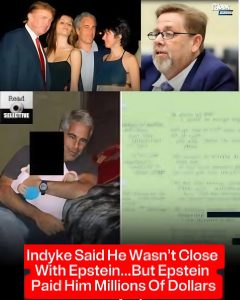
In the tangled aftermath of Jeffrey Epstein’s downfall, few figures embody the contradictions quite like Darren Indyke. For more than two decades, the veteran attorney served as Epstein’s personal lawyer and trusted fixer, handling a wide array of legal and financial matters. Records show that between 2011 and 2019 alone, Epstein and his entities paid Indyke more than $16 million in fees. Additional millions flowed in the form of forgiven loans. Then, in a will signed just two days before his death in 2019, Epstein named Indyke as co-executor of his estate and bequeathed him $50 million—one of the largest individual gifts in the document.
Yet when called to testify before the House Oversight Committee in March 2026, Indyke presented himself as an arms-length professional who barely knew the man paying him so handsomely. He maintained that he had “no knowledge whatsoever” of Epstein’s criminal activities and insisted the relationship was strictly business. “Had I known what was happening behind closed doors, I would have walked away immediately,” he told lawmakers. Indyke emphasized that he did not socialize with Epstein outside of work and had no insight into his private affairs.
As co-executor alongside accountant Richard Kahn, Indyke has overseen the administration of what remains of Epstein’s once-massive fortune—originally valued near $650 million but now significantly reduced after substantial payouts. The estate has distributed tens of millions through a victims’ compensation program and various settlements, including a recent class-action agreement worth up to $35 million. Indyke has noted that he and Kahn receive no salary for their executor roles and that any personal bequests remain contingent on all creditor claims being satisfied first.
Lawmakers pressed Indyke on the apparent disconnect: massive compensation and a $50 million legacy gift on one side, professed distance and ignorance on the other. He described handling routine legal work, corporate structuring, and occasional large cash transactions—sometimes staggered to avoid reporting thresholds—but maintained these were legitimate business practices. When asked why Epstein would leave him such a substantial sum, Indyke said he did not know, speculating it might reflect the heavy workload involved in winding down the estate.
The testimony has fueled ongoing skepticism. Critics argue that someone so deeply embedded in Epstein’s financial web for years could not plausibly remain unaware of the broader patterns surrounding his client. Indyke rejects any notion of complicity, pointing out that no accusers have directly implicated him in misconduct. He frames his continued service as executor as a professional duty to manage the estate responsibly and ensure legitimate claims are addressed.
This narrative fits a recurring theme in the Epstein saga: insiders who reaped significant rewards while later claiming limited visibility into the full picture. Indyke’s position highlights the fine—and often blurry—line between zealous legal representation and potential willful blindness. As congressional reviews continue and the estate’s final accounting unfolds, questions persist about how much those closest to Epstein truly saw, and when professional loyalty crosses into something more troubling.
Whether Indyke’s account withstands further scrutiny remains an open question. For now, it stands as a stark illustration of convenience and compensation colliding in the shadow of scandal—one where tens of millions in payments and promises meet emphatic declarations of detachment.
Leave a Reply