Survivors of Jeffrey Epstein’s horrific abuse watched in horror as their own names, email addresses, and even nude photos appeared unredacted in newly released DOJ files—exposing the very victims the Epstein Files Transparency Act was meant to shield—while heavy blackouts seemingly protected powerful figures potentially linked as co-conspirators.
In a rare burst of cross-party outrage, Senators Jeff Merkley (D-Ore.), Lisa Murkowski (R-Alaska), Ben Ray Luján (D-N.M.), and Dick Durbin (D-Ill.) demanded the Government Accountability Office conduct an independent audit into the DOJ’s redaction processes, compliance failures, and possible violations of the law prohibiting redactions for reputational or political reasons.
This bipartisan push lays bare explosive accusations of mishandling millions of documents, fueling fears that justice for victims remains obstructed by those in power.
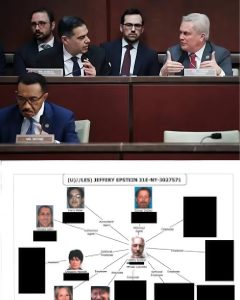
In a devastating reversal of intent, survivors of Jeffrey Epstein’s sex-trafficking empire have been re-traumatized as the Department of Justice’s (DOJ) January 30, 2026, release of Epstein files exposed unredacted victim details—including names, email addresses, and nude photos—while heavy redactions obscured information about powerful individuals potentially implicated as co-conspirators or witnesses.
The Epstein Files Transparency Act, signed into law by President Trump on November 19, 2025, required the DOJ to release nearly all unclassified records related to Epstein and Ghislaine Maxwell in a searchable format by December 19, 2025. Redactions were strictly limited to protecting victims’ privacy and national security; the law explicitly banned shielding information due to reputational harm or political sensitivities to ensure accountability for Epstein’s network of abuse.
Despite identifying over 6 million pages of material, the DOJ released about 3.5 million pages total (including the major January tranche of 3+ million pages, 180,000 images, and 2,000 videos). Reports from The New York Times, NBC News, BBC, and others revealed catastrophic failures: flawed redactions left dozens—possibly nearly 100—survivors identifiable, including some who had never publicly come forward. Lawyers for victims described it as potentially “the single most egregious violation of victim privacy in one day in United States history,” with lives “turned upside down.” The DOJ pulled thousands of documents offline for corrections, but harm had already occurred.
In stark contrast, allegations surfaced that powerful figures’ connections were disproportionately redacted or withheld. UN experts condemned the process for undermining accountability in systematic sexual abuse and trafficking.
On March 11, 2026, a rare bipartisan group—Sens. Jeff Merkley (D-Ore.), Lisa Murkowski (R-Alaska), Ben Ray Luján (D-N.M.), and Dick Durbin (D-Ill.)—sent a letter to the Government Accountability Office (GAO), demanding an independent audit of the DOJ’s redaction protocols, compliance with the Act, personnel involved (including any political appointees or contractors), and potential senior administration influence. They highlighted the glaring inconsistency: victims exposed while alleged co-conspirators shielded.
The senators stressed the need for impartial review to determine if due diligence was exercised or if processes covered up child sexual abuse evidence. As a nonpartisan legislative agency, the GAO’s probe could reveal systemic errors, deliberate obstructions, or broader failures in handling one of America’s most explosive scandals.
This cross-aisle fury reflects profound distrust in the executive branch’s transparency amid Epstein’s legacy of elite impunity and institutional lapses. Victims’ advocates and lawmakers argue survivors deserve protection and full truth to achieve justice. With prior releases delayed and incomplete, the GAO inquiry may clarify whether the Act advanced accountability—or if powerful interests continue to obstruct it, eroding public faith in the justice system.
Leave a Reply