In the shadows of Jeffrey Epstein’s opulent Palm Beach mansion, just days before police finally knocked in 2005, three private investigators slipped in and quietly carted away over 100 pieces of potential evidence—including three desktop computers, explicit photos, videos, a list of masseuses, and more—handing them straight to Epstein’s legal team. Those items, never turned over to law enforcement, have stayed hidden for two decades.
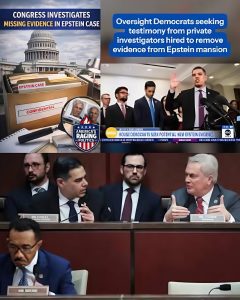
Now, Democrats on the House Oversight Committee, led by Ranking Member Robert Garcia, are demanding the investigators—Paul Lavery, Stephen Kiraly, and William Riley—testify and preserve everything they still hold, stunned that critical hard drives and materials may have evaded justice entirely.
What secrets do those missing computers still guard, and why were they removed right under the nose of the investigation? The answers could rewrite the Epstein saga.
In the shadows of Jeffrey Epstein’s opulent Palm Beach mansion at 358 El Brillo Way, a quiet operation unfolded just days before justice closed in. In early October 2005, as the Palm Beach Police Department prepared to raid the waterfront estate amid allegations of underage sex trafficking, three private investigators slipped inside. They removed more than 100 items of potential evidentiary value, including three desktop computers, hard drives, explicit photographs, videos, dozens of bound telephone directories, a list of local masseuses, and other materials. These items were handed directly to Epstein’s legal team and never turned over to law enforcement. Two decades later, they remain unaccounted for in official investigations.
The removal was documented in a 2005 memo from private investigator William Riley to one of Epstein’s defense attorneys, Roy Black. According to the memo, Paul Lavery visited the residence on or around October 7, 2005—less than two weeks before the police raid—and carted away the materials at the direction of Epstein’s lawyers. Lavery then turned the trove over to Riley, who took custody and stored it on Epstein’s behalf. The inventory included two Dell computers, one HP model, 29 telephone directories, photos of nude or partially nude women, VHS tapes (many labeled as pornography), sex toys, undergarments, a Harvard ID card, and a concealed weapons permit. When police finally searched the mansion, the computers were conspicuously missing.
Now, Democrats on the House Oversight Committee, led by Ranking Member Robert Garcia (D-CA), are demanding answers. In letters sent this week to Paul Lavery, Stephen Kiraly (Riley’s partner in the firm Riley Kiraly), and William Riley, Garcia has requested voluntary transcribed interviews and the preservation of any materials still in their possession. The committee wants details on the contents, removal, storage, and current location of the evidence. Garcia emphasized that it is “incredibly troubling” that critical hard drives and other items may have evaded law enforcement entirely, potentially limiting the full scope of what investigators and Congress have been able to review. A response deadline of April 9 has been set.
This development comes amid ongoing scrutiny of the Epstein case, fueled by recently released Department of Justice documents. During a recent deposition, Epstein’s personal attorney Darren Indyke acknowledged the existence of the hard drives removed by private investigators. The episode raises serious questions about the integrity of the original 2005-2006 investigation, which ultimately resulted in a controversial plea deal allowing Epstein to serve minimal jail time despite credible allegations involving dozens of minor victims.
What secrets might those missing computers and materials still guard? The hard drives could contain communications, financial records, videos, or digital evidence linking Epstein to high-profile associates, recruiters, or co-conspirators in his alleged sex trafficking network. The telephone directories and masseuse lists might map out the web of young women drawn into his orbit. Explicit photos and videos, many reportedly produced via hidden cameras in the mansion, could document abuses that were never fully prosecuted.
The timing—right under the nose of an active police investigation—suggests a deliberate effort to sanitize the scene and protect sensitive information. Critics argue this maneuver highlights how Epstein’s wealth and legal resources allowed him to obstruct justice, a pattern that continued until his 2019 arrest and death in custody. Former Palm Beach officials have long suspected the property was “cleaned up” before the raid.
As the House Oversight Committee pushes forward, the testimony of Lavery, Kiraly, and Riley could prove pivotal. If the materials still exist, they might fill critical gaps in the Epstein saga, exposing accomplices or powerful enablers who have thus far escaped full accountability. If they have been destroyed or hidden, it would underscore long-standing concerns about evidence tampering and unequal justice.
Two decades on, the Epstein case continues to haunt the American conscience. The removal of these items was not just a footnote in a scandal—it may have been a turning point that allowed parts of a vast criminal enterprise to slip into the shadows. Congressional scrutiny offers a belated chance to drag those secrets into the light and rewrite—or at least complete—the unfinished story of one of the most disturbing chapters in recent U.S. history.
Leave a Reply