In the sprawling digital aftermath of the Jeffrey Epstein case, one name has begun to stand out among online investigators: EricKeller2. Known for launching the platform “EpsteinExposed.com,” this anonymous figure is credited with creating what many are calling the largest interactive social network map of Epstein’s world.
Unlike traditional reports or static document dumps, EpsteinExposed.com offers something far more dynamic. It transforms millions of data points—drawn from court filings, flight logs, depositions, and public archives—into a living, clickable network. Users can explore relationships between individuals, trace timelines, and uncover patterns that would otherwise remain buried in dense legal documents.
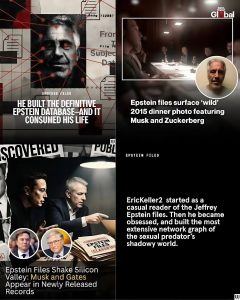
At the heart of the project is a powerful idea: visualization leads to understanding. Instead of reading thousands of pages, users can navigate a web of interconnected nodes, each representing a person, event, or location. Lines between them reveal associations—sometimes direct, sometimes indirect—creating a layered picture of Epstein’s vast social and professional circle.
EricKeller2 reportedly spent months, if not years, compiling and structuring the data. By cross-referencing names across multiple sources, the project highlights recurring connections and overlapping timelines. The result is not just a database, but an investigative tool—one that allows the public to engage with the information in a hands-on way.
The platform has quickly gained traction online. Supporters argue that it democratizes access to complex information, giving ordinary users the ability to explore and question a case often seen as opaque. Critics, however, urge caution. They emphasize that inclusion in a network map does not imply guilt, and that data without proper context can lead to misinterpretation.
Still, the impact of EpsteinExposed.com is undeniable. It reflects a broader shift in how information is processed and shared in the digital age. No longer confined to institutions, large-scale analysis can now be driven by individuals with the right tools and determination.
What makes this project especially compelling is its accessibility. You don’t need specialized knowledge to use it—just curiosity. With a few clicks, anyone can begin to see how names, dates, and places intersect in ways that raise new questions and demand closer scrutiny.
In the end, EricKeller2’s work is less about providing final answers and more about opening the door to deeper investigation. It challenges users to think critically, explore independently, and recognize that even the most complex networks can be mapped—one connection at a time.
Leave a Reply