Prophecy or Coincidence? Volochkova’s Bolshoi Claims Meet Epstein File References to Gergiev
By Russia and Eastern Europe Reporter
Published in an international affairs outlet, March 2026
For over a decade, Anastasia Volochkova has positioned herself as a whistleblower on the underbelly of Russia’s elite performing arts. The former Bolshoi Ballet star, dismissed in 2003 after clashes with management, alleged in 2013 that the theatre functioned as a de facto “brothel” for oligarchs and powerful patrons. In interviews with Russian media, she claimed administrators summoned dancers for events involving dinners followed by expected sexual encounters, framing refusal as career suicide. The accusations came amid internal Bolshoi turmoil, including an acid attack on artistic director Sergei Filin, and were met with official denials and skepticism toward Volochkova’s motives.
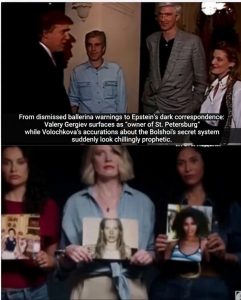
No criminal charges or independent probes substantiated her specific claims, though they contributed to a narrative of exploitation in Russia’s state-subsidized cultural bastions. Volochkova’s profile—marked by reality TV appearances, political commentary, and ongoing feuds—has kept her in the public eye, but often as a controversial rather than credible source.
February 2026 brought fresh attention via newly released Epstein-related documents. Among emails from businessman David Stern to Jeffrey Epstein in 2017, Valery Gergiev—conductor, Mariinsky Theatre head, and a prominent Putin associate—is referenced. Stern called him St. Petersburg’s “owner” (alluding to his dominance in the city’s cultural and civic life) and a “great source of P,” suggesting breakfast availability “for a fee.” The ambiguous “P” has fueled speculation in some outlets and online forums, with unsubstantiated interpretations linking it to procurement of women. Ukrainian and Western media highlighted the mention, sometimes framing it as evidence of darker networks.
Credible reporting, however—from Slippedisc, The New York Times, and The Telegraph—clarifies that the reference appears incidental. It fits Epstein’s pattern of name-dropping elites for leverage, including Russian figures like Lavrov, in pursuit of geopolitical or financial access. No evidence indicates Gergiev met Epstein, participated in illicit activities, or supplied anyone. The files show Epstein’s calculated outreach to cultural icons for prestige, not direct criminal collaboration in this case.
Online content, including YouTube analyses tying Volochkova’s Bolshoi accusations to the Epstein mention, has portrayed her as prophetic—suggesting elite arts institutions shielded abuse. These narratives often extend to conservatories and orchestras as part of a supposed “global Epstein network,” but lack supporting documentation.
Gergiev’s stature complicates the story. A key figure in Russian soft power, he has faced Western backlash over political stances yet retains immense influence domestically. No response from him or the Mariinsky has emerged regarding the files.
The juxtaposition revives debates on accountability in prestige-driven fields. Volochkova’s claims, while dramatic and unproven, reflect real concerns about patronage, coercion, and vulnerability in ballet and music worlds—issues echoed in global scandals. The Epstein documents, voluminous but often tangential, continue to generate headlines through association rather than direct implication.
Without new evidence, the link between Volochkova’s decade-old allegations and Gergiev’s passing mention remains tenuous—a reminder of how unsealed files can revive old grievances, stirring speculation in an already polarized cultural landscape.
Leave a Reply