The moment Dr. Kristin Roman set eyes on Jeffrey Epstein’s body, the signs were unmistakable: classic hanging marks, fractured hyoid, no struggle. To her trained eye, it screamed suicide—textbook, straightforward. Yet her hand froze above the death certificate. She couldn’t write the word.
“If he wasn’t a celebrity, I would have ruled it right away,” she later admitted in a raw, long-withheld interview. The billionaire’s web of powerful connections—presidents, princes, billionaires—turned a simple autopsy into a global lightning rod. One hasty signature could spark riots of conspiracy theories or worse. So she wrote “pending further studies,” a quiet act of caution in the eye of a storm.
Seven years later, those guarded words finally surface, exposing the pressure that silenced certainty. What pushed her to eventually call it suicide anyway?
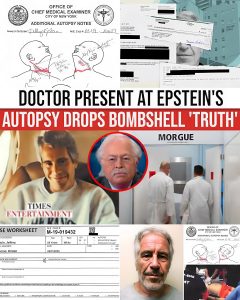
The moment Dr. Kristin Roman set eyes on Jeffrey Epstein’s body, the signs were unmistakable: classic hanging marks, fractured hyoid, no struggle. To her trained eye, it screamed suicide—textbook, straightforward. Yet her hand froze above the death certificate. She couldn’t write the word.
Epstein had been found hanging from a bedsheet tied to his bunk bed in his cell at the Metropolitan Correctional Center on August 10, 2019. The autopsy the next day revealed ligature furrows encircling the neck, petechial hemorrhages in the eyes, and fractures to the hyoid bone (at the tip) and thyroid cartilage—patterns Roman found consistent with suicidal hanging in a partial suspension, especially in an older man. No defensive wounds, no other trauma suggested homicide.
Still, she marked the manner of death “pending further studies” rather than suicide or homicide. The case’s extraordinary stakes held her back: Epstein’s connections to presidents, princes, billionaires, and alleged victims; jail failures including broken cameras and negligent guards; his recent removal from suicide watch. A rushed ruling risked fueling—or being weaponized by—conspiracy theories that could undermine justice or public trust.
“If he wasn’t a celebrity, I would have ruled it right away,” she later admitted in a raw, long-withheld interview. More precisely, in her May 2022 sworn interview with Justice Department investigators—now public in files released under the Epstein Files Transparency Act (signed November 2025, with tranches continuing into 2026)—she said: “If he had been a less high-profile person who there weren’t people wanting to kill, I would have probably called it a hanging on the day of autopsy.”
She described the autopsy findings as “pretty clear cut” for hanging suicide, even without additional investigation. Her delay was thoroughness: she sought 100% certainty, requesting cell access and staff interviews (denied, though she reviewed photos). It wasn’t doubt in the forensics but caution amid unprecedented scrutiny.
Chief Medical Examiner Dr. Barbara Sampson, Roman’s superior, reviewed the complete investigative file—including details Roman couldn’t access—and ruled suicide by hanging five days later. Roman aligned with that, affirming the evidence supported it. Despite contrary claims from Dr. Michael Baden (hired by Epstein’s brother Mark), who argued the multiple fractures suggested strangulation, Roman maintained the injuries fit hanging mechanics, not homicide.
Seven years later, those guarded words finally surface, exposing the pressure that silenced certainty. What pushed her to eventually call it suicide anyway? The forensic evidence itself—ligature pattern, scene context, absence of struggle—remained compelling and unchanged. Her boss’s broader review provided the full picture she craved. The release clarifies her hesitation as professional integrity under fire, not suppressed suspicion. In a saga defined by shadows—prison lapses, elite ties—the transcript reinforces suicide as the evidence-backed conclusion, reminding that in explosive cases, certainty must outlast speed.
Leave a Reply