The document, part of the massive Justice Department disclosure under the Epstein Files Transparency Act, carries a date of Friday, August 9, 2019. Its wording closely mirrors the official statement eventually issued: it informs the public that Epstein “had been found unresponsive in his cell” at the Metropolitan Correctional Center and had been pronounced dead shortly afterward. The draft is attributed to the office of then-U.S. Attorney Geoffrey Berman for the Southern District of New York.
Epstein was not discovered until the morning of August 10. A corrections officer found him shortly after 6:30 a.m. while delivering breakfast. He was rushed to a hospital and pronounced dead there. The New York City medical examiner later ruled the cause as suicide by hanging.
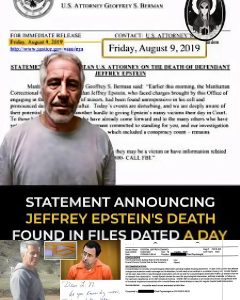
The Department of Justice has attributed the August 9 date to a simple “unfortunate typo” made during internal drafting after the death occurred. Officials say the error was corrected before any public release, and the document never left government channels until it surfaced in the 2026 files. Multiple similar drafts appear in the release, some with varying levels of redaction, but none were distributed externally on the earlier date.
Nevertheless, the anomaly has reignited debate. It surfaces against a backdrop of well-documented lapses at the jail: Epstein’s cellmate was transferred the day before, leaving him alone contrary to protocol; required overnight checks were skipped and logs falsified; surveillance cameras malfunctioned; and footage reportedly captured an unidentified figure in orange moving toward his tier around 10:39 p.m. on August 9. Epstein had also met with lawyers that day and signed a new will.
The 2026 release—exceeding three million pages, along with images and video—aims to foster greater transparency after years of public skepticism. Yet findings like the pre-dated draft continue to raise questions about procedural haste, internal communication, and the reliability of official timelines in one of the most closely watched cases in recent memory.
Epstein’s death halted a federal trial that many believed would shed light on influential connections. While authorities maintain the suicide ruling and dismiss the dating issue as clerical, the latest documents underscore how small inconsistencies can deepen distrust in high-stakes investigations.
As journalists, researchers, and the public comb through the files, this particular draft ensures the mysteries surrounding Epstein’s final hours remain alive and unresolved.
Leave a Reply