Nicholas Ribis—the former President and CEO of Trump Hotels & Casino Resorts—wrote out $158,000 and sent it directly to Jeffrey Epstein.
This happened long after Epstein’s 2008 conviction for sex crimes with minors, years after the scandals had exploded across every front page, and nearly two decades after Ribis himself had left the Trump casino empire. The money still crossed hands.
No public explanation has surfaced. No obvious business deal. Just a large payment from a man once at the very top of Trump’s Atlantic City operations straight to the convicted sex offender.
Now, newly unsealed Epstein files have dragged the transaction into the spotlight, raising disturbing questions that refuse to disappear: What was the $158,000 really for? And why, after everything the world already knew, did it happen at all?
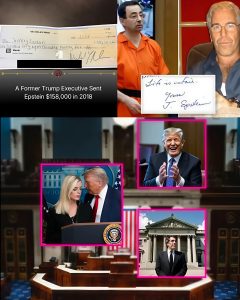
Nicholas “Nick” Ribis, the former President and CEO of Trump Hotels & Casino Resorts, once stood at the center of Atlantic City’s high-stakes casino world. During the 1990s, he oversaw several of the most prominent gambling properties associated with Donald Trump’s brand, including the Trump Taj Mahal and Trump Plaza. Decades later, however, Ribis’s name has resurfaced in connection with an unexpected financial record involving one of the most controversial figures of recent times: Jeffrey Epstein.
According to documents that have recently become public through newly unsealed Epstein-related files, Ribis wrote a check for $158,000 payable to Epstein. The payment was dated January 3, 2018.
The timing of the transaction has drawn particular attention. By 2018, Epstein had already been a registered sex offender for nearly ten years. In 2008, he pleaded guilty in Florida to charges related to the solicitation of a minor, a case that generated widespread criticism due to the controversial plea agreement he received. In the years that followed, Epstein’s name continued to appear in news coverage tied to allegations of abuse and ongoing legal battles.
Because of that history, many observers have questioned why such a payment occurred at all.
Ribis had long since moved on from the Trump casino organization by the time the check was written. After leaving Atlantic City in the late 1990s, he pursued other ventures in finance and gaming and remained active in business circles. The connection between Ribis and Epstein, however, has not been clearly explained in publicly available records.
The documents that list the $158,000 payment do not appear to provide a detailed description of its purpose. There is no publicly confirmed indication that the check was tied to a specific business contract, consulting arrangement, investment deal, or loan repayment. Without that context, the transaction has sparked curiosity and speculation among journalists and researchers who continue to examine Epstein’s network of relationships.
Throughout his life, Epstein cultivated connections with wealthy and influential individuals in business, politics, academia, and entertainment. Even after his 2008 conviction, he maintained contact with certain figures in elite financial circles, a fact that has fueled ongoing public interest in the people who interacted with him.
At the same time, a financial transaction alone does not establish wrongdoing. Large payments between business figures can occur for a variety of legitimate reasons, and without additional documentation explaining the relationship between Ribis and Epstein, it is difficult to determine the precise nature of the exchange.
What the newly surfaced record does highlight is how the Epstein story continues to unfold years after his death in 2019 while awaiting trial on federal sex-trafficking charges. Investigators, journalists, and the public continue to review documents and records in an effort to better understand the scope of his personal and financial connections.
For now, the $158,000 check written by Nicholas Ribis remains an unexplained detail within that broader narrative—a financial transaction that has raised new questions, but for which clear answers have yet to emerge.
Leave a Reply