In a Florida jail cell, Jeffrey Epstein had barely begun serving time in July 2008 for sex crimes with a minor when lightning supposedly struck: the very next day, a Powerball ticket sold in tiny Altus, Oklahoma, exploded into an $85 million jackpot. Weeks later, while he remained locked up, his own Zorro Trust — the identical shadowy entity that quietly held his vast New Mexico ranch — quietly claimed the prize and pocketed a staggering $29.3 million lump-sum payout after taxes.
The coincidence felt almost too clean. The secrecy, too convenient. Now, the explosive 2026 Epstein files drop the direct link: an explicit reference to “Zorro Trust (belonging to Epstein)” and the massive win, with his ranch manager reportedly stepping in to collect.
Was this the luckiest prisoner alive… or the ultimate hidden move?
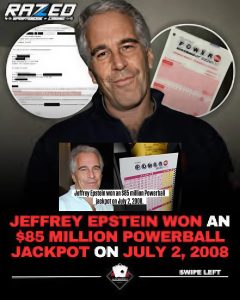
In July 2008, Jeffrey Epstein had just begun serving a controversial jail sentence in Florida after pleading guilty to charges involving the solicitation of a minor. The case had already drawn widespread criticism because of the unusual plea agreement that allowed him to serve a relatively short sentence under special conditions. Yet almost immediately after his incarceration began, an extraordinary coincidence appeared to unfold far from his jail cell.
On July 2, 2008, just one day after Epstein entered custody, a Powerball ticket sold in the small town of Altus, Oklahoma, matched the winning numbers for an $85 million jackpot. At first, the identity of the winner remained unknown. Weeks later, however, the prize was quietly claimed by a legal entity called the Zorro Trust.
Instead of accepting the full jackpot through long-term annuity payments, the trust chose the lump-sum option. After taxes and deductions, the payout amounted to about $29.3 million. Because Oklahoma rules allowed lottery prizes to be claimed by trusts or other legal entities, the public did not learn who ultimately benefited from the winnings.
For years, the story remained largely obscure. But as investigations into Epstein’s finances expanded in later years, attention gradually turned to the Zorro Trust itself. The entity had already appeared in other records connected to Epstein, particularly in relation to the ownership of his large ranch property in New Mexico, a remote estate that later became a focus of scrutiny in various investigations into his activities.
More recently, discussions surrounding documents connected to Epstein’s financial network have brought the story back into the spotlight. Among the materials referenced by journalists and researchers are documents that appear to link the Zorro Trust directly to Epstein, including a line reportedly describing the entity as “Zorro Trust (belonging to Epstein).”
If that description accurately reflects the trust’s ownership, it would mean the same entity associated with one of Epstein’s major properties also claimed the multimillion-dollar lottery prize. Reports tied to those discussions suggest that Epstein’s longtime ranch manager may have handled the process of claiming the winnings on behalf of the trust.
What has continued to intrigue observers is the timing of the events. The winning ticket was drawn almost immediately after Epstein began serving his sentence, and the trust later collected the prize while he remained behind bars. The coincidence has fueled speculation among those studying the broader story of Epstein’s finances.
However, there is no confirmed evidence that the lottery drawing itself was manipulated or that any rules were broken in the claiming of the prize. Powerball drawings are conducted under strict oversight, and winning tickets must pass several layers of verification before payments are issued. Trusts claiming lottery prizes is also a common and legal practice in many states.
The real mystery therefore centers less on the lottery itself and more on the complex web of financial structures surrounding Epstein’s wealth. Like many wealthy individuals, he relied on trusts and other legal entities to hold assets, purchase property, and conduct transactions. These structures can legally protect privacy, but they can also make it difficult to trace the full extent of someone’s financial holdings.
Nearly two decades after the Altus ticket produced its massive jackpot, the Zorro Trust win remains one of the more curious footnotes in the story of Jeffrey Epstein. Whether it was simply an extraordinary coincidence involving a trust connected to him—or just another example of how his finances moved through opaque channels—remains a question that continues to spark debate.
Leave a Reply