From Fan Memorials to Symbolic Statues: The Role of Visual Metaphors in Yu Menglong’s Legacy
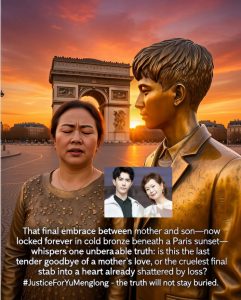
Urumqi / London – Public mourning for Chinese actor Yu Menglong has increasingly invoked timeless artistic motifs—bronze sculptures of mothers holding sons in eternal embrace—to articulate grief, maternal pain, and calls for justice. Viral descriptions portray such works as “frozen hugs” under dramatic sunsets, symbolizing unbreakable love overshadowed by tragedy and silence. However, no documented bronze memorial statue in Paris or elsewhere directly commemorates Yu and his mother; the imagery draws from broader art historical precedents and fan-created tributes.
Official findings state Yu died accidentally on September 11, 2025, falling from a Beijing apartment after alcohol consumption. Police closed the case with no criminal indications. Family statements aligned with this, while speculation about industry exploitation, financial coercion, and unheeded distress persisted online.
Symbolic resonance has centered on mother-son sculptures. Käthe Kollwitz’s “Mother with her Dead Son” (a bronze Pietà in Berlin, originally 1937–1938) appears frequently in posts, its grieving mother’s shut eyes and cradled lifeless son interpreted as mirroring Yu’s mother’s alleged anguish. Other references include generic cemetery bronzes in Paris or global memorials of parental bereavement, reframed as “accusations” demanding accountability for Yu’s death. Fans highlight his documented devotion to his mother—childhood photos, shopping hugs, and reported final messages expressing love and fear—as emotional anchors.
Actual tributes remain modest: a memorial bench in Iceland near Höfði Lighthouse, fulfilling Yu’s expressed wish to visit, has drawn visitors leaving notes and flowers. Rumors of installations at Beijing’s 798 Art District or elsewhere describe “hauntingly familiar” figures, but no verified bronze statue of a mother-son embrace tied to Yu exists in Paris or Xinjiang (his hometown, where ashes were reportedly returned).
The absence of a physical Paris memorial does not diminish the power of these projections. Art like Kollwitz’s—created in response to personal and collective loss—offers a universal language for grief when direct speech is limited. In China’s censored online environment, symbolic imagery allows mourning and critique to coexist: the “eternal hug” conveys enduring love while implying unresolved injustice.
Broader context includes documented pressures in the entertainment sector—intense schedules, mental-health challenges, and power imbalances—that fans believe contributed to Yu’s distress. No new investigation has followed, leaving questions about alleged red flags unanswered.
These visual metaphors highlight art’s role in processing collective trauma. Whether they evolve into formal memorials or remain digital expressions, they ensure Yu’s memory—and his mother’s pain—endures beyond official closure.
Leave a Reply