A startling discovery has emerged from the newly released 2026 Epstein files, reigniting intense scrutiny over the circumstances surrounding the death of financier Jeffrey Epstein. Among millions of pages of documents made public by the U.S. Department of Justice, a draft press statement from federal prosecutors stands out for its perplexing date: August 9, 2019—one full day before Epstein was officially found unresponsive in his cell at the Metropolitan Correctional Center in Manhattan.
Epstein, who faced serious federal charges at the time, was discovered dead on the morning of August 10, 2019. According to prison records, a corrections officer found him shortly after 6:30 a.m. while delivering breakfast. The official ruling pointed to suicide by hanging, though the case has long fueled conspiracy theories due to reported lapses in jail protocols, including malfunctioning cameras and absent guards.
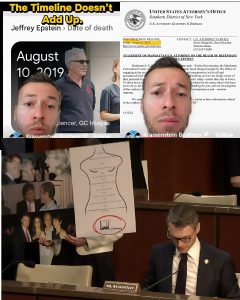
The draft statement, attributed to then-U.S. Attorney Geoffrey Berman for the Southern District of New York, reads in part: “Earlier this morning, the Manhattan Correctional Center confirmed that Jeffrey Epstein… had been found unresponsive in his cell and pronounced dead shortly thereafter.” It carries a release date of Friday, August 9, and expresses condolences while reaffirming the office’s commitment to justice for victims. Multiple versions of similar drafts appear in the files, some with varying redactions, but the August 9 timestamp on this internal document has raised eyebrows across media and online communities.
Officials have moved quickly to downplay the anomaly. The Department of Justice told investigators, including BBC Verify, that the date was simply an “unfortunate typo” inserted during the drafting process. The error allegedly occurred after Epstein’s death, when staff hurriedly prepared the announcement for internal circulation. The incorrect date was corrected before any public release, they insist, and the document in question never left government hands until its inclusion in the massive 2026 file dump.
Skeptics, however, are not convinced. In an era of heightened distrust toward institutions, the pre-dated draft has sparked fresh questions: How could such a basic mistake happen in a high-profile case under intense national attention? Why prepare language announcing a death before it occurred? Some point to broader irregularities surrounding Epstein’s final hours, including earlier reports of surveillance gaps and staffing failures detailed in prior investigations.
The 2026 release, mandated under the Epstein Files Transparency Act, contains over three million pages, thousands of images, and hours of video. It aims to promote openness but has instead amplified long-standing debates about accountability in the justice system. Epstein’s death cut short a trial that many hoped would expose wider networks of influence.
While authorities maintain the draft error was innocuous, the discovery underscores how even minor inconsistencies can erode public confidence. As analysts continue poring over the files, the episode serves as a reminder of the enduring mysteries tied to one of the most controversial figures in recent American history. Whether a simple clerical slip or something more, the pre-dated statement has ensured Epstein’s story remains far from closed.
Leave a Reply