Veteran journalist Alisa Valdes-Rodriguez is drawing renewed attention after stating she has been “permanently injured” following what she describes as directed energy weapon attacks—allegedly linked to her reporting on the late financier Jeffrey Epstein.
The claim comes shortly after Valdes-Rodriguez publicly announced she was fleeing the country, citing fears for her safety. At the time, she suggested that her investigative work into Epstein’s network—long associated with powerful figures across politics, business, and entertainment—had made her a target. Now, her latest statements escalate the situation further, alleging lasting physical harm.
In a series of posts and interviews, Valdes-Rodriguez described experiencing severe and persistent health issues, which she attributes to exposure to what she calls “directed energy weapons.” While the term is sometimes used in military and scientific discussions to describe experimental technologies, there is no verified evidence supporting its use in scenarios like the one she describes. Nevertheless, the journalist insists that her symptoms began only after publishing sensitive material and that they have continued to worsen over time.
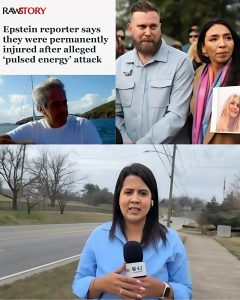
“I am permanently injured,” she reportedly said, framing her condition as the result of deliberate targeting rather than coincidence or illness. She has not provided medical documentation publicly confirming the cause of her injuries, but maintains that the timing and nature of her symptoms are directly tied to her reporting activities.
Her decision to leave the country underscores the seriousness with which she views the threat. According to her account, she no longer felt safe remaining in her previous location, believing that the alleged attacks could continue or escalate. This move has fueled further speculation online, with some supporters echoing her concerns while others question the plausibility of the claims.
Experts and analysts, however, urge caution. Allegations involving advanced or covert weaponry require strong, verifiable evidence—something that has not yet emerged in this case. Without independent confirmation, many observers categorize the claims as unproven. Similar narratives involving “directed energy attacks” have surfaced in the past but have often lacked substantiation when examined by scientific or investigative bodies.
Still, the connection to Epstein ensures the story remains in the spotlight. Even years after his death, Epstein’s name continues to be linked to ongoing investigations, document releases, and speculation about hidden networks of influence. Any claim tied to his legacy—particularly one involving potential harm to a journalist—inevitably attracts widespread attention.
The situation highlights a broader challenge in today’s information landscape: distinguishing between credible investigative reporting and extraordinary claims that remain unsupported by evidence. While journalists working on sensitive topics can face real risks, those risks must be carefully assessed and verified before conclusions are drawn.
For now, Valdes-Rodriguez’s allegations remain controversial and unconfirmed. As the story develops, the key question will be whether any independent evidence emerges to support her claims—or whether they remain part of a growing wave of unresolved and highly debated narratives surrounding Epstein’s enduring legacy.
Leave a Reply