In a stunning fall from grace, the powerful chairman of global logistics giant DP World—a man who built a shipping empire touching 10% of the world’s container traffic—suddenly stepped down as explosive emails with convicted sex offender Jeffrey Epstein surfaced, including disturbing exchanges that shocked the business world.
Sultan Ahmed bin Sulayem, long hailed as a visionary who transformed the Dubai-based company into an international powerhouse, resigned effective immediately after newly released files revealed hundreds of messages exchanged over more than a decade with Epstein.
The timing couldn’t be more dramatic: just as fresh scrutiny from U.S. documents hit, the high-flying executive who mingled with global elites found his empire crumbling under the weight of controversy.
Now, with new leadership stepping in, questions swirl about what else these hidden ties might uncover—and how far the ripple effects will reach across international trade and elite circles.
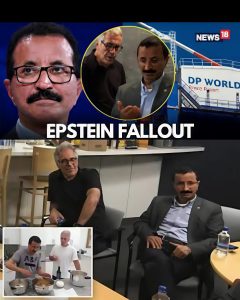
The abrupt resignation of Sultan Ahmed bin Sulayem has sent shockwaves through global business circles, marking a dramatic turning point for one of the most influential figures in international logistics. As chairman of DP World, bin Sulayem oversaw an empire that handled nearly 10% of the world’s container traffic, helping position Dubai as a critical hub in global trade.
His departure comes in the wake of newly surfaced documents revealing extensive communication with disgraced financier Jeffrey Epstein. According to reports, the exchanges—spanning more than a decade—include hundreds of emails that have raised serious concerns within both corporate and political spheres. While the full content of the messages has not been publicly detailed, their existence alone has been enough to trigger intense scrutiny and reputational fallout.
For years, bin Sulayem was widely regarded as a visionary leader, credited with transforming DP World from a regional port operator into a global logistics powerhouse with operations across six continents. Under his leadership, the company expanded aggressively, securing strategic ports and terminals that became vital arteries for international commerce. His influence extended beyond business, placing him among a network of global elites who frequently intersected across finance, politics, and industry.
The timing of the revelations has only intensified their impact. As U.S. authorities continue to release documents tied to Epstein’s network, high-profile individuals and institutions have found themselves under renewed examination. In this climate, even indirect associations carry significant consequences, particularly for leaders of multinational corporations whose reputations are closely tied to trust and governance.
DP World has moved quickly to stabilize its leadership, announcing an interim successor and emphasizing its commitment to transparency and operational continuity. However, analysts warn that the fallout may not be contained so easily. Investors, partners, and regulators are likely to probe deeper into the nature of the relationship and whether any business dealings were influenced or compromised.
Beyond the immediate corporate implications, the episode underscores a broader pattern emerging from the ongoing Epstein disclosures: the far-reaching connections between powerful individuals across seemingly unrelated sectors. As more information comes to light, the ripple effects are expected to extend well beyond any single resignation, potentially reshaping perceptions of accountability at the highest levels of global business.
For now, the sudden exit of Sultan Ahmed bin Sulayem stands as a stark reminder of how quickly reputations can unravel—and how deeply interconnected the world’s elite networks truly are.
Leave a Reply