The contrast is as striking as it is unsettling. Ghislaine Maxwell is now serving a 20-year prison sentence for her role in facilitating the crimes of Jeffrey Epstein. Convicted in a U.S. court, she became one of the few high-profile figures held accountable in a scandal that spanned continents, elites, and decades. Yet her father, Robert Maxwell—a man surrounded by allegations of espionage and fraud—was honored in death with a state-level funeral attended by world leaders.
Robert Maxwell’s life reads like a Cold War thriller. A powerful media baron, he built an empire that placed him at the center of politics, finance, and global influence. But after his sudden death in 1991—officially ruled an accidental drowning—his legacy unraveled. Investigations exposed massive financial misconduct, including the looting of employee pension funds, leaving thousands financially devastated.
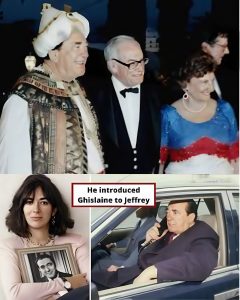
At the same time, Maxwell’s name became entangled in claims of intelligence ties. Multiple journalists and former insiders have alleged that he had connections to Mossad. Some accounts go further, suggesting he may have acted as an asset. However, these assertions have never been conclusively proven in public, and no official inquiry definitively established his role as a spy.
Despite the controversies, Robert Maxwell was buried with extraordinary honors in Israel. His funeral drew high-ranking officials and prominent figures, underscoring the influence he wielded even in death. For critics, this moment symbolizes something deeper: how power and connections can shape not only a person’s life, but also their legacy.
Decades later, his daughter’s downfall has revived interest in those unanswered questions. Ghislaine Maxwell’s conviction provided a rare instance of accountability in the Epstein case, yet it also highlighted how much remains unresolved. Epstein himself died before standing trial, and many of the powerful individuals linked to his orbit were never charged.
The juxtaposition is difficult to ignore. A daughter condemned in a courtroom, her crimes laid bare before the world. A father, whose life was shadowed by scandal and suspicion, yet whose final farewell was marked by respect and ceremony at the highest levels.
Still, caution is necessary. While Robert Maxwell’s financial crimes were proven, the claims regarding his intelligence connections remain disputed. Drawing direct lines between his alleged activities and his daughter’s actions risks oversimplifying a complex web of events and relationships.
Even so, the story continues to provoke debate. It raises enduring questions about justice, influence, and the uneven ways in which history judges individuals. Why are some figures relentlessly scrutinized while others seem to escape full examination? And to what extent do power and proximity to authority shape those outcomes?
In the end, the Maxwell legacy exists in two starkly different chapters. One defined by conviction and punishment. The other by mystery, controversy, and a farewell that, for many, only deepened the intrigue. Whether those two stories are connected—or simply parallel—remains one of the most compelling unanswered questions of our time.
Leave a Reply