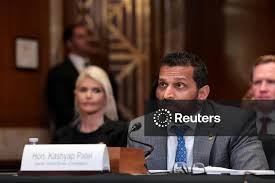
In a packed congressional hearing, FBI Director Kash Patel stared down lawmakers and delivered a firm refusal: he could not release the full Jeffrey Epstein files because court orders tied his hands. But the shocking twist came fast—judges overseeing the case had already made it clear those orders only covered narrow grand jury secrets, a tiny slice compared to the vast FBI investigative records from 2006 and 2018 that the government is free to disclose.
One federal judge even called the push for grand jury material a “diversion,” explicitly stating the FBI holds the real trove that could finally shed light on Epstein’s powerful network. Yet Patel insisted the bureau had already released everything legally possible, igniting furious accusations of a cover-up from both sides of the aisle.
Why is critical information still locked away? The public is left wondering who—or what—is truly being protected.



Washington, D.C. – In a packed congressional hearing, FBI Director Kash Patel faced intense scrutiny from lawmakers demanding the full release of Jeffrey Epstein’s investigative files. Patel stood firm, stating that court orders prevented him from disclosing certain materials. However, the exchange took a dramatic turn when representatives cited a federal judge’s explicit statements that those restrictions apply only to a narrow set of grand jury secrets — a tiny fraction compared to the massive trove of FBI investigative records from the 2006 and 2018 probes.
The judge had emphasized that the government holds the real power — and responsibility — to disclose the broader Epstein files, even describing the focus on grand jury materials as a potential “diversion.”
Patel’s Stance: “We’ve Released Everything Legally Allowed”
Patel maintained that the FBI has already produced tens of thousands of pages and released all credible information permitted under the law, including references to high-profile figures. He cited protective orders, plea agreements, and grand jury secrecy rules (Rule 6(e)) as key barriers.
“We are releasing as much as legally allowed,” Patel responded under questioning. The bureau had even gone to court to seek the unsealing of additional materials, but faced denials in some cases.
The Judge’s Words Fuel the Fire
Lawmakers pushed back hard, pointing to U.S. District Judge Richard M. Berman’s August 2025 ruling. The judge noted that the government’s 100,000+ pages of Epstein investigative files “dwarf” the roughly 70 pages of grand jury materials, which “pale in comparison.” He described the government as “the logical party” to make comprehensive disclosures.
Accusations flew across the aisle. One lawmaker directly told Patel: “You are hiding the Epstein files, Mr. Patel. You are part of the cover-up.”
Critics questioned why the bulk of FBI records from the earlier investigations — witness interviews, evidence summaries, and more — remain largely withheld despite the judge’s clear guidance.

Why the Files Remain Locked
The Epstein scandal continues to raise profound questions about accountability, victim privacy, and potential protection of powerful individuals. While some grand jury records carry strict legal protections, the larger body of FBI investigative materials does not face the same absolute barriers, according to judicial commentary.
Patel and supporters stress concerns over victim safety, child exploitation material, and ongoing legal constraints. Opponents argue that greater transparency is long overdue on one of America’s most disturbing elite networks.

Public Demands Grow
As pressure mounts from both sides of the political spectrum, the central question remains: Who or what is truly being protected by keeping critical information under wraps? The hearing ended without new commitments for broader releases, leaving the public demanding answers on Epstein’s associates, enablers, and the full scope of his operations.
Developments in the Epstein files saga are ongoing, with lawmakers promising continued oversight.
Leave a Reply